


Looking Back: Innovative Event Ideas from 2025

Champions behave like champions before they’re champions.
– BILL WALSH
Hall of Fame NFL Football Coach,
San Francisco 49ers

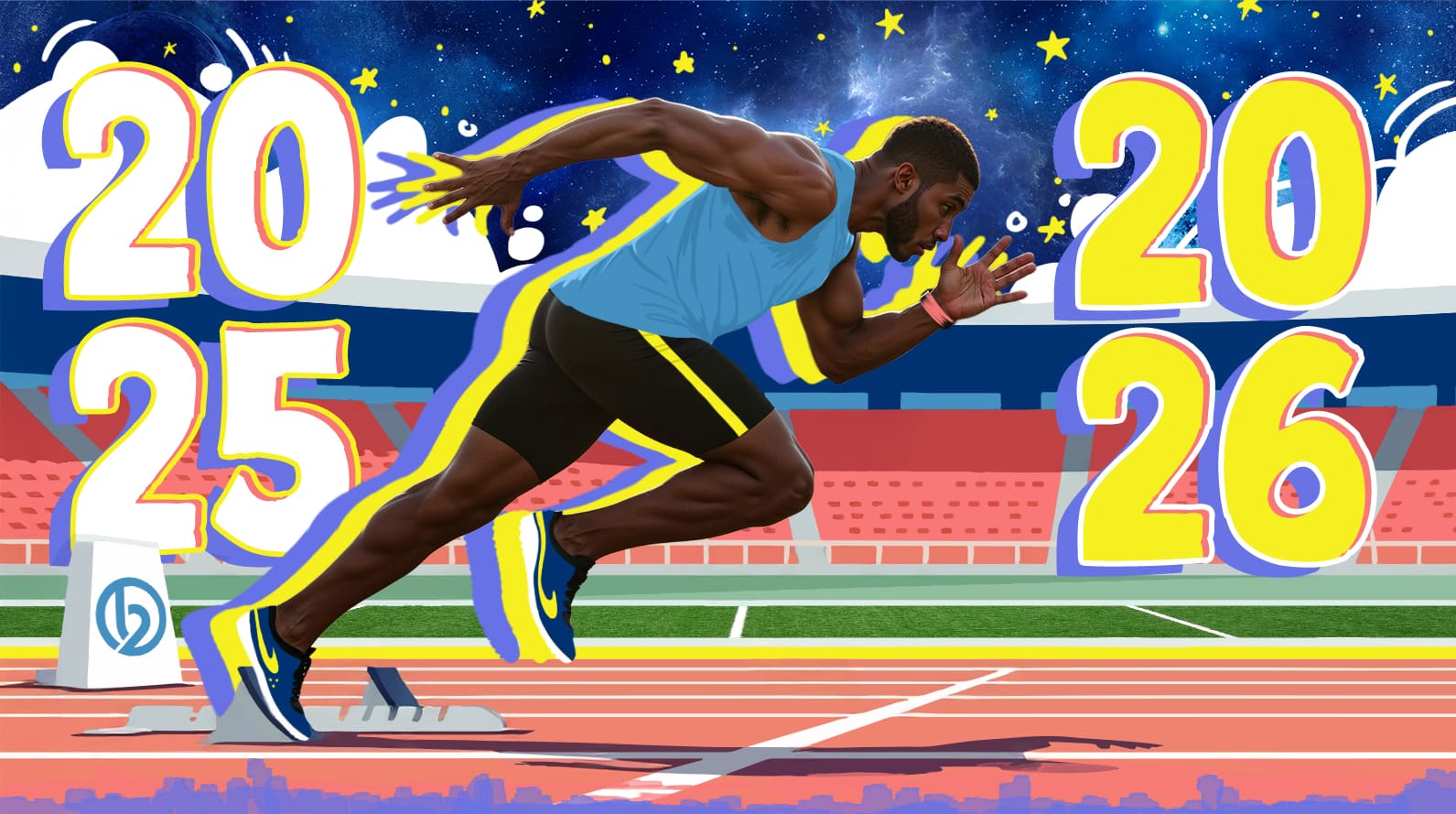
If 2025 were an athlete, it wasn’t casually jogging the track – it was in full stride, powering through the year with focus, grit, and a surprising burst of creativity when the industry needed it most.
This was the year our imagination trained hard, showed up ready, and delivered performances that made us all pause and go, “Wait…we actually pulled that off?”
Here’s a look back at the ideas, tools, and trends that we believe pushed corporate events over the finish line.
AI Co-Hosts That Actually Helped
2025 was the year AI finally stopped being a novelty onstage and started becoming infrastructure. We’ve already moved past those humanoid mascots and “look what our robot can say!” demos.
Enter practical, behind-the-scenes intelligence that make shows run more smoothly.
The AWS re:Invent 2025 show set the benchmark.
They didn’t sprinkle AI into their event – they made it a key player. Their system predicted attendee flow in real time, shifted digital signage based on crowd density, and kept hundreds of sessions moving without the familiar last-minute chaos. It acted like a silent stage manager with a supercomputer’s brain: optimizing transitions, preventing bottlenecks, and keeping the entire event ecosystem in sync.
And that opened the door for AI assistants to step into the spotlight – not as gimmicks, but as genuinely helpful co-hosts. They delivered live data to presenters, helped the show caller nudge panelists with time cues, adapt scripts when speakers wandered, and even added a little personality along the way:
Useful. Calm. Efficient. (If I had that level of composure, I’d be dangerous!)
Audiovisual Storytelling Went Immersive
LED walls got bigger, pixels got sharper, and content finally caught up with the technology. 2025 was the year teams stopped treating LED as a giant TV and started using it as a storytelling environment.
We saw:
- 360° wraparound content
- Backgrounds shifting with speaker tone
- Motion graphics that enhanced rather than attacked the eyeballs
Events used the huge high-tech visuals to transform people – minus the motion sickness.
Who Did It:
Adobe MAX 2025 took immersive AV to the next level, using real-time graphics, wraparound content, and themed environmental zones that changed based on where attendees walked or which session they entered.
The Rise of “Micro-Moments”
Hey, attention is a fragile thing! Forget the old model of one big wow moment.
2025 embraced micro-moments:
- AR pop-ups
- More creative surprise audio flourishes
- Lighting cues matched to emotional beats
- Quick animations reinforcing speaker insights
Little sparks that kept people plugged in without overwhelming them.
Who Did It:
Many designers pushed this trend, but it was especially visible in major tech conferences like Google Cloud Next and various Fortune 500 internal summits, where teams built interactive entryways, ambient lighting shifts, and mini-AR activations to boost engagement all day long.
Stage Design Went Modular
2025 killed the era of building a million-dollar stage you could use exactly once. (Finally, hallelujah!)
Enter modular scenic systems – adult Legos for event producers. A single kit could become:
- Keynote stage
- Fireside chat
- Press backdrop
- Networking nook
Same pieces. Endless variations.
Budget-friendly, eco-friendly, creative-friendly.
Who Did It:
Companies like Stageco and Skyline Exhibits led the modular revolution with reconfigurable scenic systems used across national roadshows and multi-city corporate tours.
Graphics Teams – the Show MVPs
Graphic teams were doing much more than ‘making pretty slides’ – they were shaping the narrative!
We saw:
- Broadcast-style PowerPoints with powerful motion graphics
- Motion-first brand systems
- Onsite design pods solving problems in real time
- Live animations adapting to data
2025 proved graphics aren’t “support.” They’re the show’s heartbeat.
Who Did It:
Adobe MAX pushed this to the limit with onsite creative pods producing real-time motion graphics using Firefly and Creative Cloud, allowing content to evolve mid-session.
Hybrid Events Got Smarter (And Less Awkward)
Virtual attendees no longer got the discounted version; hybrid events in 2025 finally leveled the playing field. Virtual attendees were right there in the room, interacting, reacting, and shaping the experience alongside on-site participants.
Hybrid upgrades included:
- LED-integrated live polls that displayed results instantly on the main stage, giving both in-person and online audiences a shared sense of participation.
- Remote questions injected into teleprompters so speakers could respond to virtual attendees in real time, making it feel like every voice mattered.
- VR backstage access letting remote participants peek behind the curtain, explore sets, and experience the event from angles previously reserved for staff.
- Interactive lower thirds for online participants – dynamic on-screen graphics that highlighted names, comments, or reactions, ensuring virtual attendees were visible, acknowledged, and part of the story.
For the first time, it truly felt like one audience, not two disconnected streams. The gap between “live” and “virtual” shrank to nothing, and engagement skyrocketed.
Who Did It:
Salesforce’s Dreamforce 2025 continues to be a hybrid heavyweight – in-person keynotes + hands-on sessions + a full virtual experience via Salesforce+. They created role-based, AI-powered, real-time learning experiences. The event leaned into Agentforce (their AI agent strategy), anchoring its core messaging in both the physical and virtual components.
“Sustainable” Stopped Being a Buzzword and Became a Build Plan
2025 clients wanted receipts. Not “we try to be green,” but: “Show me the carbon math.”
Producers responded with:
- Recyclable scenic
- LED flooring instead of carpet
- Low-power AV gear
- QR microsites instead of printed programs
- LEED-certified venues and hotels committed to energy and water efficiency
- Zero-waste approach with compostables, reusables, and clear waste-sorting stations
- Plant-forward, locally sourced menus to reduce emissions
- Encouraging low-carbon travel through transit passes, rail incentives, and carpool networks
- Eliminating wasteful and swag with plastic, opting for digital materials or truly functional, sustainable items
- Integrated sustainability education directly into the main event program
Who Did It:
B Corp always leans into sustainability wholeheartedly with their Champions Retreat. Their national event draws more than 2,000 attendees, and they treat sustainability like a non-negotiable production pillar. Everything from venue selection to menus to swag was designed with a low-impact mindset, proving that eco-friendly choices don’t have to feel limiting – they can actually elevate the attendee experience.
The “Vibe Director” Became a Real Job
Some laughed. Then they went to an event with a vibe director… and got it.
These energy curators oversaw:
- Music
- Transitions
- Ambience
- Hallway experiences
Were they extra?
Absolutely.
Did they make events feel alive?
Also absolutely.
Who Did It:
Large-scale tech and entertainment events (AWS re:Invent, Adobe MAX, gaming expos) embraced versions of this role – tasking teams with shaping emotional tone, pacing, and hallway energy in addition to main-stage production.
Real-Time Data Took Over the Cue Sheet
Show callers used analytics more than ever. Live data fed:
- Engagement heat maps
- Viewer drop-off moments
- Slide-by-slide performance
- Expo dwell times
- Session overflow predictions
Calling cues became calling strategy.
Who Did It:
AWS-style enterprise conferences leaned heavily into live operations data, integrating AI-powered dashboards that informed everything from room changes to crowd flow management to content pacing.
The Most 2025 Trend of All: Events Became Experiences, Not Itineraries
The real revolution was more than tech – it was intention. Events were designed around:
- How people feel
- How they move
- How they learn
- How they connect
Curated hallways, quiet lounges, guided networking, and general sessions with streaming-style pacing all pointed to one truth:
Attendees want flow, not chaos.
Who Did It:
Adobe MAX 2025 led the charge with themed zones, “Creator Confessional” booths, emotional arc-based session planning, and environments designed for exploration – not just attendance.
In Conclusion
Looking back, 2025 was a turning point. It was a year where creativity, technology, design, and production aligned to make events more human, more immersive, and more unforgettable.
If this is what we came up with in 2025…
2026 better stretch first.
Need help with your event?
Contact us and we can help you plan your next event.